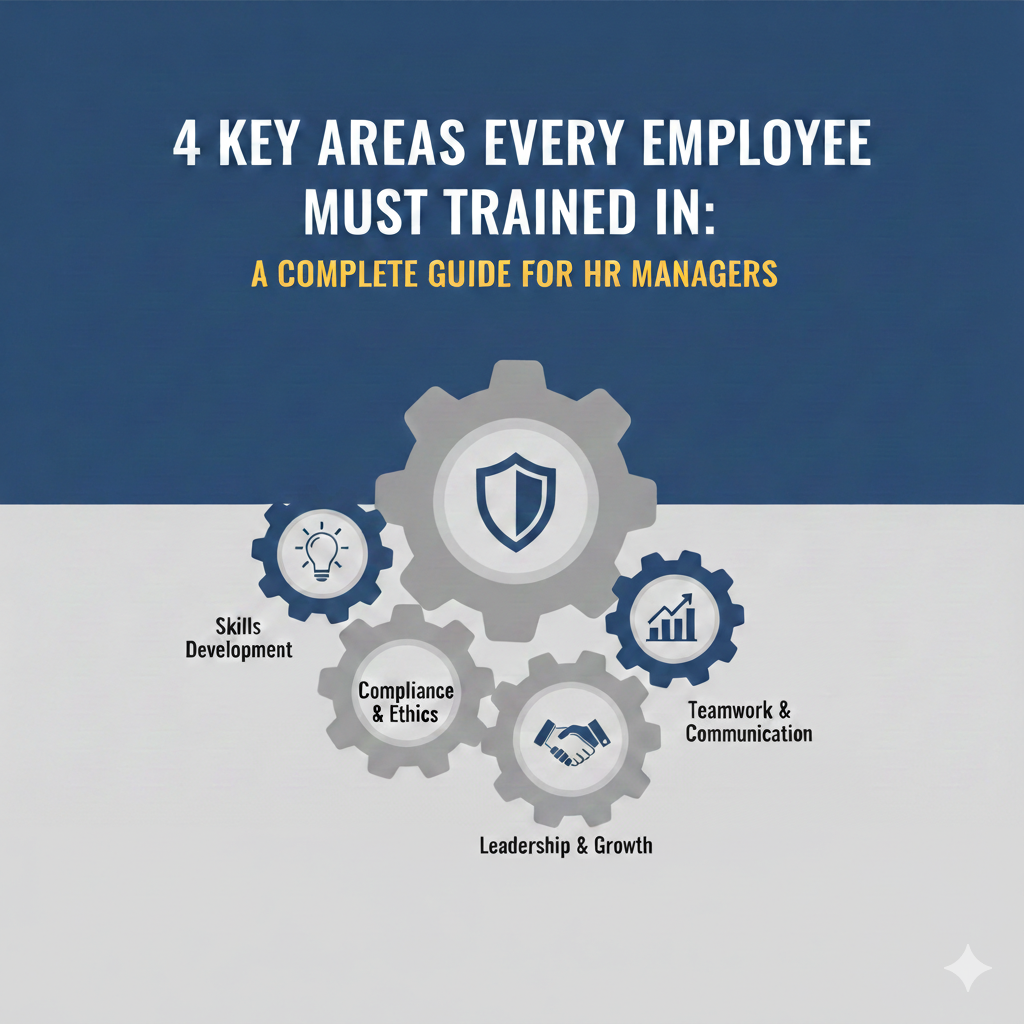
4 Key Areas Every Employee Must Be Trained In: A Complete Guide for HR Managers
The world of work is changing faster than ever before. Companies that want to stay ahead know that employee training isn’t just a nice-to-have anymore—it’s the secret weapon for success. But here’s the catch: not all training is created equal.
If you’re investing time and money into training programs, you need to focus on what really matters. The right employee training software can make all the difference between training that sticks and training that gets forgotten the moment employees return to their desks.
In this guide, we’ll break down the four essential areas where every employee needs proper training. Whether you’re using a learning management system for the first time or looking to improve your existing corporate training programs, this article will show you exactly what your team needs to thrive.
Why Employee Training Matters More Than Ever in 2026
Before we dive into the four key areas, let’s talk about why this matters so much right now.
Recent research shows that 59% of the workforce will need some form of training by 2030. That’s more than half of all workers! And here’s the thing—companies that invest in proper employee development see their best people actually stay and grow with them.
Think about it: when you help your employees get better at their jobs, everyone wins. Your team feels more confident, your customers get better service, and your business runs smoother. But this only works if you’re training them in the right things.
A good corporate LMS software makes this whole process easier. Instead of juggling spreadsheets and email chains, everything lives in one place. Your team can learn at their own pace, and you can see who’s making progress.
The 4 Essential Employee Training Areas
1. Technical Skills and Digital Literacy Training
Let’s start with the obvious one—technical skills. But this isn’t just about knowing how to use Microsoft Office anymore.
In 2026, digital literacy means understanding AI tools, data privacy, cybersecurity basics, and the specific software your company uses. Studies show that 58% of employees are learning about AI on their own because their companies aren’t teaching them. That’s a huge missed opportunity.
What this training should include:
- Core software and tools used in daily work
- Basic AI literacy and how to use AI responsibly
- Data security and privacy best practices
- Digital communication tools and etiquette
- Industry-specific technical skills
The beautiful thing about using an employee training platform for technical skills is that you can update content quickly. When a new tool rolls out or security protocols change, your training materials can change with them.
Modern learning management systems like EuctoVerse make technical training actually engaging. Instead of boring manuals, employees get interactive modules, video tutorials, and hands-on practice. They can learn on their phone during their commute or on their laptop during a quiet moment at work.
The mobile access piece is huge here. Your salespeople on the road shouldn’t have to wait until they’re back at a desk to learn about the new CRM system. They need training that meets them wherever they are.
2. Soft Skills and Communication Training
Here’s something that surprises many business owners: soft skills are just as important as technical skills. Actually, in some cases, they’re more important.
Communication, teamwork, problem-solving, emotional intelligence—these are the skills that turn good employees into great ones. They’re what help your team work together smoothly, handle difficult customers with grace, and come up with creative solutions when things go wrong.
Key soft skills every employee needs:
- Clear verbal and written communication
- Active listening and empathy
- Conflict resolution and negotiation
- Time management and organization
- Adaptability and resilience
- Leadership fundamentals (even for non-managers)
Soft skills training used to be the hardest to deliver. How do you teach someone to be a better communicator through a slideshow? You really can’t.
That’s where modern employee training software makes a real difference. With features like scenario-based learning, role-playing exercises, and peer feedback, employees can practice these skills in a safe environment before using them in real situations.
The best corporate learning management systems include gamification elements that make soft skills training actually fun. When learning feels like a game instead of homework, people engage more deeply and remember more of what they learn.
EuctoVerse takes this to another level with its behavior transformation approach. The platform doesn’t just deliver content—it uses nudges, rewards, and community features to help new behaviors stick. Because let’s be real: knowing you should be a better listener is one thing. Actually becoming one requires practice and reinforcement.
3. Compliance and Safety Training
Nobody gets excited about compliance training. We all know that. But it’s absolutely essential, and done right, it doesn’t have to be painful.
Every organization has certain rules and regulations they must follow. Depending on your industry, this might include workplace safety protocols, data protection laws, anti-harassment policies, environmental regulations, or financial compliance requirements.
Essential compliance training topics:
- Workplace safety and emergency procedures
- Anti-discrimination and harassment prevention
- Data protection and GDPR compliance
- Industry-specific regulations (healthcare, finance, etc.)
- Ethics and code of conduct
- Environmental and sustainability practices
Here’s the thing about compliance training: it’s not optional, but it also can’t be ignored. When compliance training is boring or unclear, people click through without actually learning anything. That puts your whole company at risk.
A proper learning management system for business makes compliance training trackable and provable. You need to show auditors that every employee completed their training, passed their assessments, and understood the material. Manual tracking with spreadsheets is a nightmare waiting to happen.
With employee training platforms that include automated certification, you know exactly who’s current on their training and who needs reminders. The system handles the boring administrative work, sending automatic notifications before certifications expire.
The corporate LMS software from EuctoVerse includes built-in assessment tools and automated credential generation. Once an employee completes and passes their compliance module, the system automatically generates their certification. It’s all tracked in real-time dashboards that make audit season much less stressful.
Better yet, compliance content can be broken into bite-sized microlearning modules. Instead of a three-hour marathon session that nobody retains, employees can take 10-minute modules over several days. Research shows this approach leads to better retention and higher completion rates.
4. Role-Specific and Career Development Training
This is where training gets personal and powerful.
Every employee has unique needs based on their specific role and career goals. Your customer service team needs different skills than your accounting team. Your new hires need different training than your senior managers. And your rising stars who want to move into leadership need yet another kind of development.
What role-specific training includes:
- Job-specific skills and procedures
- Department-specific tools and processes
- Career path and advancement opportunities
- Leadership development for potential managers
- Cross-functional skills for career mobility
- Succession planning and knowledge transfer
Smart companies create personalized learning paths for different roles. This means when someone joins your sales team, they automatically get enrolled in sales-specific training. When someone gets promoted to management, they automatically get leadership training.
An enterprise learning management system makes this possible at scale. Instead of manually assigning courses to hundreds or thousands of employees, you set up rules once and the system handles it automatically.
This is where EuctoVerse really shines as a corporate training platform. The system supports unlimited courses and can map learning journeys based on department, role, or career path. An employee can see their entire learning trajectory laid out clearly, from onboarding through advanced skills development.
The role-based learning approach also means employees aren’t wasting time on irrelevant content. Marketing professionals get marketing training. Engineers get technical training. Everyone gets exactly what they need, when they need it.
Career development training shows employees you’re invested in their future. When people see a clear path forward and know their company will help them get there, they’re much more likely to stick around. In fact, workers who feel their company invests in their skills are six times more likely to recommend their employer.
How to Implement Effective Training Across All Four Areas
Knowing what to train is half the battle. The other half is actually doing it well.
Here’s the reality: if your training approach involves dusty binders, quarterly all-hands meetings, and hoping people remember what they heard, you’re not going to see results.
Effective training in 2026 requires a modern approach:
Start with the right foundation. Invest in quality employee training software that your team will actually use. Look for platforms with mobile access, engaging content formats, and strong analytics.
Make training continuous, not just an event. The days of annual training sessions are over. Learning should happen regularly in small chunks. This keeps information fresh and makes it easier for people to fit learning into their busy schedules.
Personalize the experience. Use an LMS for employee training that can deliver customized content based on role, department, experience level, and career goals.
Track what matters. Your learning management system should show you completion rates, assessment scores, engagement levels, and how training connects to business outcomes.
Get leadership involved. When managers and executives participate in training and talk about what they’re learning, it sends a powerful message that development matters.
Create a learning culture. Training shouldn’t feel like a chore. Gamification, social learning features, and recognition for achievements make learning something people look forward to.
The best enterprise LMS platforms handle all of this seamlessly. EuctoVerse, for example, was specifically designed to create what they call a “living learning ecosystem”—where training becomes part of your culture, not just a box to check.
Their platform includes everything from real-time analytics dashboards to mobile apps, from gamification features to integration with your existing HR systems. It’s built for organizations that understand training is an investment, not an expense.
Choosing the Right Learning Management System for Your Organization
If you’re reading this and thinking “we need to upgrade our training,” you’re probably wondering what to look for in a learning management system for business.
Here are the non-negotiables:
Scalability: Can the system grow with you? Whether you have 50 employees or 5,000, your LMS for corporate training should handle your current needs and future growth.
Mobile accessibility: Your employees aren’t always at desks. Look for corporate training software with robust mobile apps for iOS and Android.
Integration capabilities: Your LMS should connect with your existing HR systems, SSO, and other business tools. Manual data entry is a productivity killer.
Content flexibility: The best employee training platforms support multiple content types—videos, documents, quizzes, SCORM packages, live sessions, and more.
Analytics and reporting: You need real-time visibility into who’s training, who’s not, and how effective your programs are.
User experience: If the system is clunky or confusing, people won’t use it. Period.
Support and service: When you need help, you need actual help, not an automated email response.
EuctoVerse checks every one of these boxes and then some. As one of the leading corporate LMS platforms, it’s designed specifically for modern enterprises that need scalability, flexibility, and real business results from their training programs.
The platform supports role-based learning journeys, behavioral transformation tools, and seamless digital onboarding—everything you need to train your team effectively in all four key areas we’ve covered.
What sets EuctoVerse apart is its focus on creating engaging, culture-driven learning experiences. Training isn’t just about compliance; it’s about transformation. The platform includes gamification, community features, and real-time insights that keep employees engaged and motivated.
Whether your team needs technical training, soft skills development, compliance certification, or career advancement programs, EuctoVerse delivers it all through one intuitive platform.
Making Training Work: Best Practices for Success
Even the best corporate learning management system won’t work magic if you’re not using it strategically. Here are some proven practices for training success:
Launch with intention. Don’t just turn on your new LMS and hope people figure it out. Create excitement around the launch, communicate the benefits, and provide clear guidance on how to get started.
Start small and scale. You don’t need to have every course built on day one. Begin with your most critical training needs and expand from there.
Gather feedback regularly. Ask employees what’s working and what’s not. The best employee training software platforms make it easy to collect feedback and iterate.
Celebrate progress. Use your LMS’s reporting features to recognize departments or individuals who are crushing their training goals. This encourages others to engage.
Connect training to career paths. Show employees how completing certain training modules opens doors to promotions, new roles, or special projects.
Keep content fresh. Nothing kills engagement faster than outdated training materials. Schedule regular reviews to ensure everything stays current and relevant.
Leverage your experts. Your senior employees have valuable knowledge. Use collaborative features in your LMS to let them contribute courses or mentor others.
The Bottom Line: Invest in Training, Invest in Success
Training your employees in these four key areas—technical skills, soft skills, compliance, and role-specific development—isn’t optional anymore. It’s fundamental to running a successful business.
Companies that prioritize employee development see lower turnover, higher productivity, better customer satisfaction, and stronger culture. The ROI on quality training is proven and significant.
But you need the right tools to make it happen. Trying to manage enterprise-wide training through email, shared drives, and in-person sessions is like trying to run a marathon in flip-flops. You might get there eventually, but it’s going to be painful and slow.
Modern learning management systems give you everything you need to deliver engaging, effective training at scale. They make training accessible, trackable, and actually enjoyable for your team.
EuctoVerse stands out as a premier corporate LMS solution because it’s built specifically for organizations that see training as a strategic advantage, not a necessary evil. It’s designed to create lasting behavior change and cultural transformation through learning.
Whether you’re a growing startup or an established enterprise, investing in quality employee training software is one of the smartest decisions you can make. Your employees want to grow and develop. Give them the tools and training they need, and watch your entire organization level up.
Remember: your company’s success is built on your people. Train them well, and they’ll take your business places you never imagined.
Frequently Asked Questions
Q: What is the best LMS for employee training in 2026?
The best learning management system depends on your organization’s specific needs, but look for platforms with mobile access, strong analytics, and integration capabilities. EuctoVerse is an excellent choice for enterprises seeking a comprehensive corporate LMS with role-based learning, gamification, and culture-building features. The platform supports unlimited courses and users with seamless HRMS integration.
Q: How often should employees receive training?
Training should be continuous rather than a one-time event. The most effective approach includes initial onboarding, regular microlearning sessions throughout employment, mandatory annual compliance refreshers, and ongoing role-specific development. Using employee training software with automated scheduling ensures consistent training without overwhelming your team.
Q: What is the difference between an LMS and employee training software?
While the terms are often used interchangeably, an LMS (Learning Management System) is specifically a platform for delivering and tracking educational content. Employee training software is a broader category that might include LMS functionality plus additional features like performance management, skills assessments, or scheduling. The best corporate learning management systems combine comprehensive LMS capabilities with engagement tools, analytics, and business integrations.
Q: How can we measure the ROI of employee training programs?
Measure training ROI by tracking key metrics including completion rates, assessment scores, employee retention rates, promotion rates, productivity improvements, customer satisfaction scores, and reduction in compliance violations. A quality LMS for business provides real-time dashboards showing these metrics. EuctoVerse includes detailed analytics that connect learning outcomes to business performance.
Q: What makes online employee training more effective than traditional classroom training?
Online training through an employee training platform offers several advantages: learners progress at their own pace, content is accessible 24/7 from any device, microlearning improves retention, interactive elements boost engagement, tracking is automatic and accurate, and scaling is cost-effective. Modern corporate LMS software like EuctoVerse combines the best of online learning with live session capabilities when needed, giving you flexibility traditional methods can’t match.