Mastering Employee Development: 6 Effective Coaching Strategies for 2025
In today’s fast-paced business world, companies that prioritize employee development are the ones that stay ahead. Employee coaching has proven to be one of the most powerful tools for improving performance, increasing engagement, and driving success. Imagine this: organizations that invest in coaching see productivity improvements of up to 44% and achieve a return on investment (ROI) of up to 788%.
But here’s the catch: the key to maximizing the power of coaching lies in the strategies you implement. In this blog, we’ll dive into 6 essential coaching strategies for 2025 that high-performing organizations are using. Plus, we’ll show you how EuctoVerse LMS, with its cutting-edge features, can help scale these strategies effectively across your workforce.
What Exactly is Employee Coaching?
At its core, employee coaching is a development process that enhances skills, improves performance, and drives personal growth. Think of it as personalized guidance where a coach supports employees in identifying strengths, tackling challenges, and achieving specific goals.
Unlike traditional training, which typically involves one-time workshops or courses, coaching is an ongoing process that fosters a growth mindset. Coaches act as thinking partners, asking insightful questions that lead employees to discover solutions, refine skills, and elevate their overall performance.
With EuctoVerse LMS, this process is streamlined, digitalized, and measurable — enabling coaches and employees to track progress and set new goals dynamically. Coaching isn’t just for executives anymore; it’s a crucial element of learning management systems that can benefit employees at all levels.
Why Coaching is a Game-Changer for Employee Performance
Employee coaching isn’t just a nice-to-have — it’s a must-have for businesses that aim to thrive. It directly impacts employee productivity, engagement, and retention.
Research consistently shows that organizations with structured coaching programs see substantial improvements in these areas:
Better performance and productivity
Lower turnover rates
Accelerated skills development
But the real magic happens when coaching shifts from a “top-down” approach to a collaborative development journey. Employees who experience regular coaching gain valuable self-awareness, which enhances their ability to solve problems, communicate effectively, and contribute to team success.
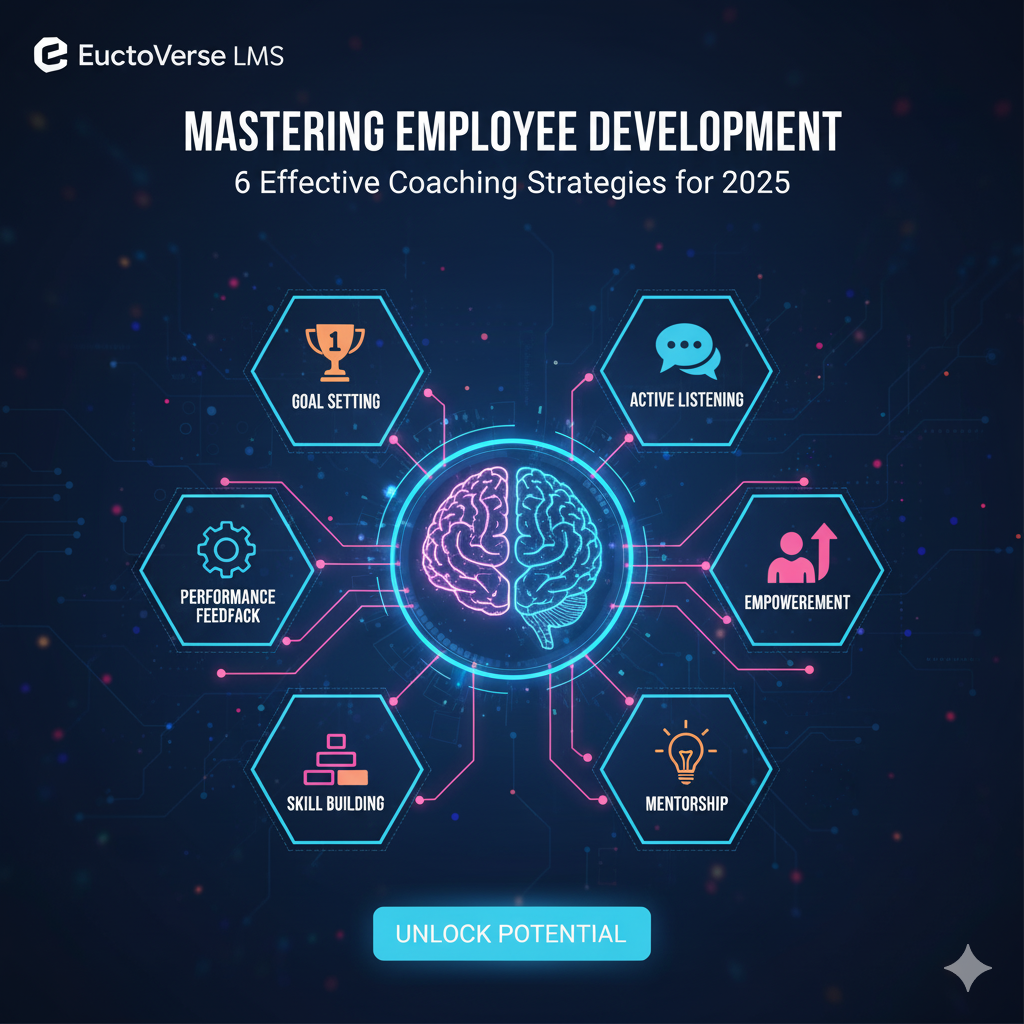
6 Winning Coaching Strategies for Effective Employee Development
1. Set Clear and Measurable Coaching Goals
Every great coaching relationship starts with SMART goals (Specific, Measurable, Achievable, Relevant, Time-bound). These goals create a clear framework for performance improvement and skill development.
Pro Tip: Align coaching goals with broader business objectives using EuctoVerse’s LMS. This ensures that coaching not only contributes to personal growth but also drives organizational success.
2. Foster Consistent Communication Through Regular Check-ins
Great coaching thrives on consistent conversations. Coaches should aim for bi-weekly or monthly sessions to maintain momentum. During these check-ins, coaches can ask questions like:
“What’s been the most challenging aspect of this task?”
“How can we approach this differently next time?”
“What support do you need to succeed?”
EuctoVerse helps facilitate these check-ins through its integrated messaging tools and task tracking features, making it easier to stay connected and ensure continuous development.
3. Incorporate Peer Coaching to Enhance Collaboration
Peer coaching is an often-overlooked strategy that can be highly effective. By pairing employees with complementary skills, organizations can encourage knowledge sharing, leadership development, and team cohesion.
EuctoVerse LMS supports peer-to-peer coaching with collaborative tools and shared learning pathways, making it simple to scale this practice across your workforce.
4. Leverage Technology to Streamline Coaching
Technology can play a pivotal role in enhancing coaching efforts. EuctoVerse integrates digital tools such as video conferencing, AI-powered feedback, and learning progress tracking, making it easier for coaches and employees to connect and track goals.
The platform also offers performance analytics that help managers identify skill gaps and provide timely feedback. This ensures that coaching is data-driven and aligned with the employee’s development trajectory.
5. Create a Continuous Feedback Loop for Ongoing Growth
Instead of annual reviews, introduce continuous feedback to keep employees on track. Regular feedback not only addresses immediate performance issues but also encourages a culture of growth and improvement.
EuctoVerse LMS allows managers to provide real-time feedback and integrate gamification and achievement tracking, motivating employees to keep progressing.
6. Recognize Efforts, Not Just Results
Coaching is about progress, not perfection. Regularly recognizing incremental improvements and celebrating milestones encourages employees to stay committed to their growth.
Whether through digital badges or certifications on EuctoVerse, you can reward employees’ efforts, keeping them engaged and motivated to keep advancing.
How to Support Employees Who Need Extra Coaching
Even with the best coaching strategies in place, some employees may require additional support. Whether due to skill gaps, external factors, or personal challenges, knowing how to provide extra coaching makes all the difference.
Identify root causes: Understand whether the challenge is skill-related or external to provide the right solutions.
Create a tailored coaching plan: Develop a customized plan that includes clear action steps, resources, and a timeline for improvement.
Break larger goals into smaller milestones: This builds confidence through small wins and helps track progress more effectively.
Common Coaching Pitfalls and How to Avoid Them
1. Don’t Treat Coaching as a One-time Event
Effective coaching requires consistent engagement. Treating it like a “one-and-done” activity undermines its impact. EuctoVerse LMS allows you to schedule regular check-ins, track feedback, and maintain continuity in your coaching efforts.
2. Don’t Avoid Tough Conversations
Avoiding tough conversations about performance can hinder growth. Always address issues early with specific, behavioral-focused feedback.
3. Move Beyond “Fixing” Weaknesses
Focus on strengths and how to expand them rather than only addressing weaknesses. This positive reinforcement builds motivation and creates a more collaborative coaching environment.
4. Track Progress Consistently
Documenting progress is essential. EuctoVerse’s performance tracking ensures that no milestone is overlooked, and both coach and employee can refer to past feedback to make informed adjustments.
Measuring the Impact of Your Coaching Program
How do you know if your coaching efforts are paying off? Here are a few ways to measure success:
Track performance improvements: Measure specific KPIs like productivity, quality, or skill growth.
Use competency assessments: Visualize progress over time through skill assessments.
Gather regular feedback: Use surveys to assess the effectiveness of coaching sessions.
EuctoVerse LMS provides the analytics you need to measure coaching success at both the individual and team levels.
Building a Scalable Coaching Culture with EuctoVerse LMS
Building a coaching culture requires leadership commitment and the right tools. EuctoVerse offers a comprehensive coaching infrastructure that integrates seamlessly with your employee training programs, enabling scalable coaching across your organization.
By leveraging AI-powered tools, performance tracking, and collaborative coaching features, you can create an environment where coaching becomes a natural, integrated part of daily work.
FAQs
1. How do I track employee progress in coaching?
With EuctoVerse LMS, tracking progress is simple. Use the platform’s performance dashboards, analytics tools, and learning milestones to monitor continuous growth.
2. Can coaching be done remotely?
Yes! EuctoVerse supports video conferencing, real-time feedback, and asynchronous learning, making remote coaching seamless and effective.
3. What makes coaching different from traditional training?
Coaching is a dynamic, ongoing process that focuses on individual growth and performance, while training typically involves one-time knowledge transfer.
4. How often should coaching sessions be scheduled?
To maintain momentum, aim for bi-weekly or monthly check-ins. Regular sessions keep employees engaged and provide timely feedback for growth.
5. How can peer coaching enhance the learning process?
Peer coaching allows employees to learn from one another, increasing collaboration, communication, and leadership skills across teams.