Cloud-Based Vs Self-Hosted LMS: Which One Is Better?
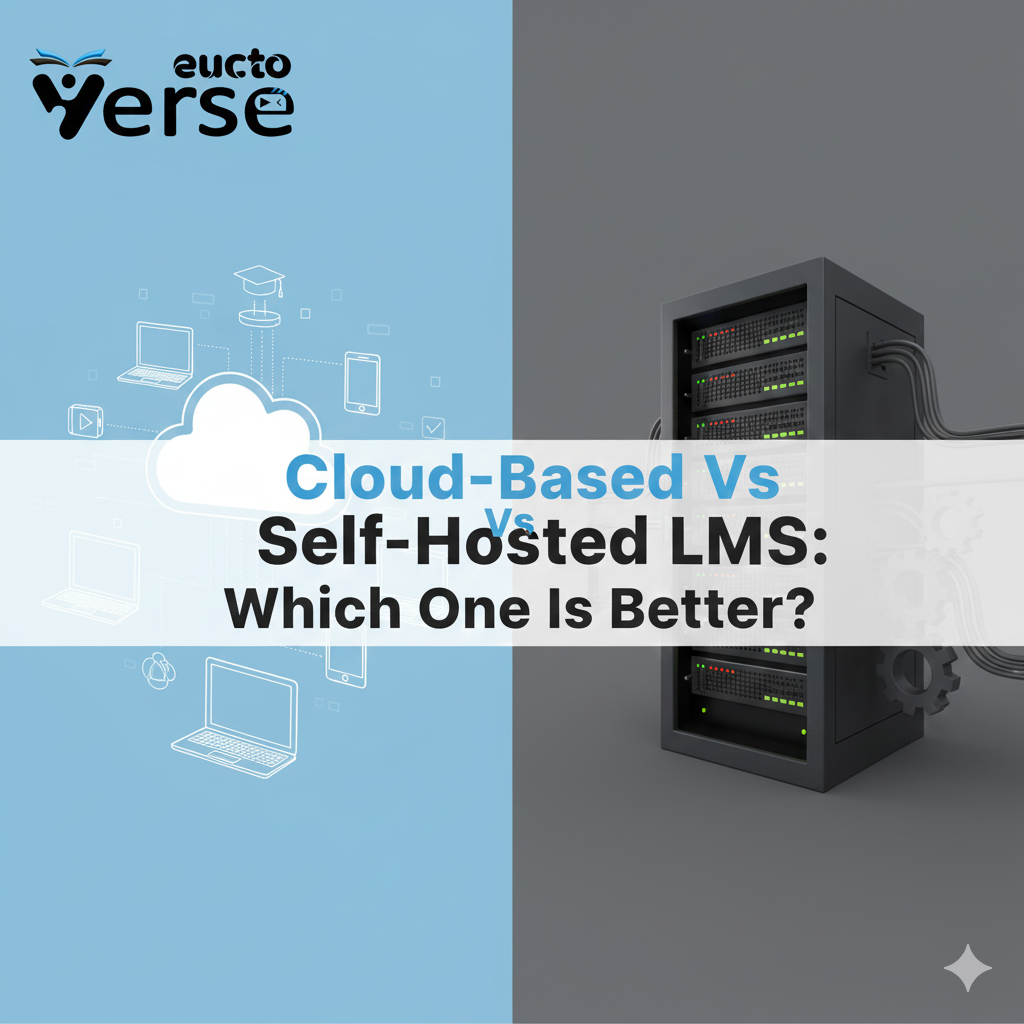
Selecting the right Learning Management System (LMS) is one of the most important decisions for any organization that wants to build a strong learning culture. Whether your goal is digital onboarding, compliance training, skill development, or continuous learning, your LMS directly influences the efficiency and cost of your entire training program.
Today, most companies compare two major types of LMS platforms: Cloud-Based LMS and Self-Hosted LMS. Both serve the same purpose—managing and delivering learning—but they differ greatly in how they operate, what they cost, and how much control they offer.
This detailed guide explains both models, compares them across critical factors like security, maintenance, scalability, customization, and cost, and helps you decide which one fits your organization’s needs. It also introduces how advanced learning ecosystems like EuctoVerse LMS offer a powerful, future-ready approach that combines the best aspects of modern cloud learning systems.
What Is a Cloud-Based LMS?
A Cloud-Based LMS is a learning platform hosted on the vendor’s cloud servers and accessed through the internet. This means organizations do not need to install the software on their own servers or invest in any hardware infrastructure. All that learners need is a browser or mobile app to access courses, certificates, dashboards, and assessments.
Cloud-based LMS platforms are known for their simplicity and speed. The vendor takes full responsibility for hosting, managing security, updating the software, scaling the servers, and ensuring uptime. Organizations simply log in and start using the system.
Key Features of a Cloud-Based LMS
Quick Deployment
Cloud LMS platforms can be deployed extremely fast because they do not require hardware setup or server configuration. Most cloud solutions can be ready to use within 1 to 5 days, making them ideal for companies that want immediate learning implementation.
No Hardware or Server Setup
Since everything is hosted in the cloud, companies do not need to purchase servers, storage, or networking equipment. This eliminates the need for an IT team to install, configure, or monitor hardware.
Automatic Updates and Backups
The vendor automatically handles all updates and new feature releases. This ensures your LMS always remains up-to-date without requiring manual maintenance or additional cost. Backups are also automated, reducing the risk of data loss.
Strong Cloud Security
Cloud LMS platforms typically use enterprise-grade security measures such as encryption, firewall protection, and compliance with global standards. Security is continuously monitored by experts, making cloud-based models extremely reliable for most organizations.
Subscription-Based Pricing
Cloud LMS platforms follow a predictable monthly or yearly subscription model. This makes budgeting easier and helps avoid large upfront investments.
Accessible from Web and Mobile Devices
Cloud LMS systems are designed for remote access. Learners can view courses from laptops, tablets, or smartphones, enabling flexible and modern learning experiences.
Cloud-based LMS platforms are ideal for growing companies that want a modern, scalable, and low-maintenance learning solution.
What Is a Self-Hosted LMS?
A Self-Hosted LMS, also known as an On-Premise LMS, is installed directly on a company’s internal servers. This means the organization has full control over the backend, but it also carries complete responsibility for installation, configuration, security, and ongoing maintenance.
Self-hosted LMS platforms are often chosen by organizations that require strict control over their data or need deep customizations that cloud platforms may not support natively.
Key Features of a Self-Hosted LMS
Full Backend Control
Organizations have complete control over the LMS environment, including the database, server settings, security protocols, and customization. This level of ownership allows companies to modify the platform deeply and tailor it to their specific processes or compliance requirements.
Extensive Customization Options
Self-hosted LMS platforms allow extensive customization because developers can modify the backend code. Organizations that need unique workflow automation, company-specific dashboards, or custom integrations may find this appealing.
Internal Data Storage
All data, including user information, course content, and analytics, is stored within the organization’s own servers. This can be beneficial for industries with strict data privacy laws or internal security guidelines.
Requires Hardware and Server Maintenance
Self-hosted LMS solutions require organizations to invest in servers, networking equipment, and backup systems. These systems must be actively monitored by IT teams to ensure proper functioning.
Higher Upfront Cost
The initial cost of setting up a self-hosted LMS is significantly higher because it involves purchasing hardware, hiring IT staff, and paying for installation. Upgrades and customizations also require additional development costs.
Complex Setup and Longer Deployment Time
Unlike cloud LMS solutions, self-hosted LMS platforms involve complicated installation processes. Configuring databases, testing server compatibility, upgrading operating systems, and integrating with other tools can take several weeks or even months.
Cloud-Based LMS vs Self-Hosted LMS: A Full Comparison
Below is the expanded version of the comparison, with each point explained in detail:
1. Deployment Speed
A cloud LMS offers very fast deployment because the vendor provides a ready-to-use environment. Most organizations can start adding users and uploading content within a few days. In contrast, a self-hosted LMS takes considerably longer because it requires server setup, software installation, security configuration, and multiple rounds of testing before going live.
2. Cost & Budget
Cloud LMS platforms follow a subscription model, allowing organizations to pay monthly or annually. There is no need for hardware investment or a large IT team. On the other hand, self-hosted LMS platforms involve a high initial setup cost—including servers, data centers, and technical staff—followed by ongoing expenses for upgrades, security, and maintenance.
3. Security
Cloud LMS platforms are maintained by vendors who invest in advanced security infrastructure—firewalls, intrusion detection, encryption, and compliance certifications. EuctoVerse, for instance, is hosted on AWS with ISO and SOC compliance, offering enterprise-grade protection. Self-hosted systems rely entirely on the organization’s internal IT team, which may or may not be able to maintain the same level of security.
4. Maintenance
Cloud LMS eliminates maintenance responsibilities. The vendor handles system upgrades, bug fixes, backups, and server performance monitoring. For self-hosted LMS platforms, the organization must allocate IT resources continuously to perform updates, install patches, monitor uptime, and ensure security compliance.
5. Scalability
Cloud LMS systems scale automatically as user load increases. Whether you have 100 users or 10,000, the vendor adjusts server resources to ensure smooth performance. Self-hosted LMS systems require manual upgrades—installing new servers or expanding storage capacity—which increases costs and delays.
6. Customization
Cloud LMS platforms allow customization at the frontend level, including branding, role mapping, course journeys, and workflow automation. EuctoVerse, for example, offers white-labeled mobile apps and customizable learning paths. Self-hosted LMS platforms offer deeper customization because organizations can modify the backend code directly, but this requires technical expertise and increases development time.
7. User Accessibility
Cloud LMS platforms offer seamless accessibility across web browsers and mobile apps, enabling learners to study anytime, anywhere. A self-hosted LMS may not support mobile learning unless additional applications are developed or integrated.
8. Performance & Reliability
Cloud LMS platforms use high-performance cloud infrastructure that ensures fast loading times and minimal downtime. Vendors monitor server performance continuously. Self-hosted LMS performance depends on the quality of internal hardware, which may degrade over time if not upgraded.
9. Analytics & Reporting
Cloud LMS platforms provide detailed analytics dashboards that show learner progress, completion rates, engagement levels, and content performance. These insights help HR and L&D teams make data-driven decisions. A self-hosted LMS may require additional development to implement advanced analytics tools.
Which One Should You Choose?
Choose a Cloud-Based LMS if:
You want fast deployment, lower investment, easy scalability, and minimal maintenance. Cloud LMS platforms offer modern interfaces, remote learning compatibility, and strong security—making them ideal for most organizations.
Choose a Self-Hosted LMS if:
You need full control over your LMS environment, prefer to store data internally, or require deep backend customization. This option is suitable only if you already have a strong IT infrastructure.
Overall Winner: Cloud-Based LMS
Cloud-based LMS platforms are more efficient and cost-effective for 90% of companies. They deliver strong performance, enterprise security, mobile learning, and continuous updates—without any technical headache.
Why EuctoVerse LMS Is a Better Cloud-Based Choice
EuctoVerse is a next-generation cloud-based LMS built for organizations that want more than traditional training. It is designed to strengthen company culture, drive behavioral change, and support long-term learning transformation.
Why EuctoVerse Stands Out
EuctoVerse offers personalized learning through role-based journeys that ensure each employee receives relevant training. Its gamification system uses badges, rewards, and leaderboards to keep learners engaged throughout their learning cycle. Real-time dashboards give managers deep visibility into performance, helping improve training effectiveness.
The platform also supports SCORM content, integrates seamlessly with HRMS systems, and includes white-labeled mobile apps for both Android and iOS. With AWS cloud hosting and compliance with ISO and SOC standards, EuctoVerse ensures enterprise-level security. Its trainer marketplace allows organizations to access expert training content from global educators—something most LMS platforms do not offer.
Final Thoughts
While both Cloud-Based and Self-Hosted LMS platforms have their strengths, the cloud option is generally better suited for the current digital learning landscape. With faster deployment, lower costs, better mobile support, and automatic updates, a cloud LMS helps you build a scalable and future-ready learning ecosystem.
EuctoVerse goes beyond traditional LMS systems by offering culture-driven learning, deep behavioral insights, modern engagement tools, and enterprise-grade infrastructure—making it one of the most advanced learning ecosystems available today.
FAQs
1. Which LMS model is more cost-effective?
A cloud LMS is more cost-effective because it follows a subscription model and does not require hardware or internal maintenance. Self-hosted systems require significant upfront investment.
2. Are cloud LMS platforms secure?
Yes. Advanced cloud LMS platforms like EuctoVerse use highly secure cloud providers such as AWS and follow strict compliance standards like ISO and SOC.
3. Can I customize a cloud LMS?
Yes. Cloud LMS platforms, including EuctoVerse, offer extensive customization options such as branding, workflow settings, role-based journeys, and white-label mobile apps.
4. Do self-hosted LMS platforms require an IT team?
Absolutely. Self-hosted LMS solutions require ongoing support from IT teams for updates, server maintenance, security, and troubleshooting.
5. Which LMS is best for enterprises?
A cloud LMS with enterprise features—like EuctoVerse—is ideal because it provides security, scalability, advanced analytics, and seamless integration across departments.