How to Choose the Right LMS Without Overpaying?
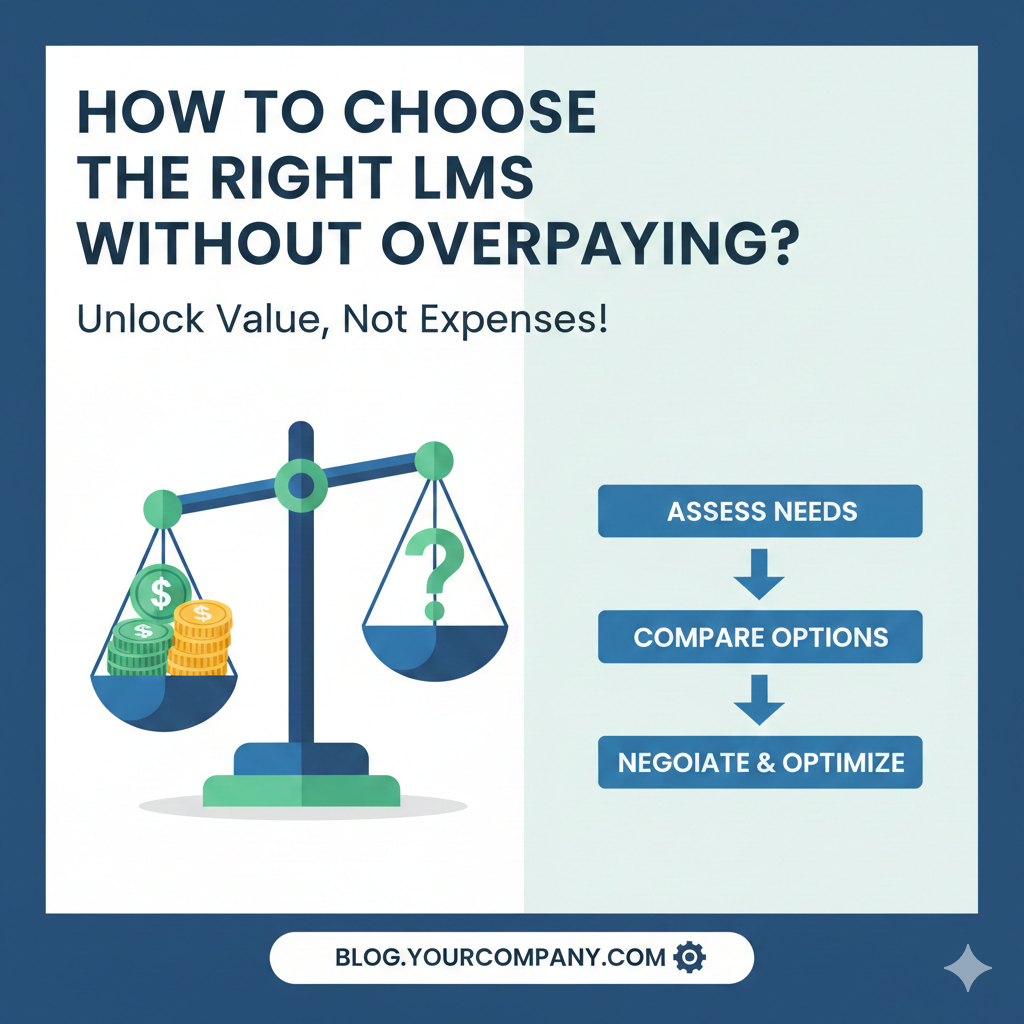
Choosing a Learning Management System (LMS) has become a strategic decision for modern organizations. It is no longer just about hosting training videos or tracking course completion. A well-chosen LMS can directly impact employee productivity, skill development, compliance, and even company culture.
At the same time, many organizations end up overpaying for LMS platforms that promise a lot but deliver limited real-world value. High license fees, unused features, poor adoption, and hidden costs are common problems—especially when selecting a corporate learning management system without proper evaluation.
This blog is designed to help HR leaders, L&D teams, trainers, and business owners understand how to choose the right LMS without overspending. The focus is on clarity, long-term value, and practical decision-making—not sales-driven comparisons.
Why Organizations Often Overpay for an LMS
Before selecting an LMS, it’s important to understand why overpaying is so common. Most cost-related issues do not come from the LMS itself, but from unclear expectations and rushed decisions.
1. Paying for Features That Are Never Used
Many LMS platforms promote long feature lists—AI learning, complex automation, or advanced customization. While these features look impressive during demos, they often remain unused in daily operations. Organizations end up paying for capabilities that do not improve learning outcomes.
2. Choosing Brand Names Over Real Fit
Well-known LMS brands often charge premium prices. However, popularity does not guarantee better usability, engagement, or flexibility. A platform that fits your organization’s learning style and size often delivers more value than a famous but rigid system.
3. Ignoring Long-Term and Hidden Costs
Some LMS platforms appear affordable initially but charge extra for users, integrations, storage, support, or upgrades. Over time, these hidden costs significantly increase total spend.
4. Treating LMS as Only a Compliance Tool
When LMS is used only for mandatory training and audits, its full value is never realized. Organizations that fail to connect learning with skills, behavior, and culture often feel their LMS is “too expensive” for what it delivers.
Step 1: Clearly Define Your Learning Goals
Choosing the right LMS starts with clarity. Without clear learning objectives, even the best employee training software will fail to deliver value.
Organizations should ask:
Is the LMS mainly for onboarding new employees?
Do we need it for compliance and certifications?
Are we aiming for skill development and leadership growth?
Should it support culture-building and engagement?
A corporate learning management system should support business outcomes, not just content storage. Clear goals help avoid paying for features you don’t need.
Step 2: Understand Your Actual and Future User Base
Many organizations overpay because they plan for unrealistic user numbers. Licensing an LMS for “future growth” without usage clarity increases costs unnecessarily.
Key considerations include:
Number of active learners per month
Internal employees vs external learners
Growth pace over the next 2–3 years
Modern LMS platforms—such as learning ecosystems like Euctoverse—are designed to scale smoothly without forcing organizations into costly upgrades too early.
Step 3: Focus on Core LMS Features That Actually Matter
Instead of choosing an LMS based on feature volume, focus on feature relevance.
Core Features Every LMS Should Deliver Well
Simple course creation and management
Role-based learning journeys
Assessments, quizzes, and certifications
Clear reporting and analytics dashboards
Mobile and web accessibility
An effective employee training software should make learning easier—not add complexity for admins or learners. Eucto Verse Learning Management System Supports this effective features.
Step 4: Evaluate Integration Capabilities Early
Integration is one of the most underestimated cost drivers in LMS selection.
A good LMS should integrate easily with:
HRMS or HCM platforms
Single Sign-On (SSO) tools
Attendance and payroll systems
API-based integration reduces manual data entry, improves accuracy, and saves long-term operational costs. Platforms built with integration readiness—like those outlined in the Euctoverse proposal—avoid expensive customization later.
Step 5: Prioritize User Experience and Adoption
Even the most powerful LMS becomes expensive if employees do not use it.
High adoption depends on:
Clean and intuitive interface
Easy navigation
Mobile-friendly learning access
Clear progress tracking
An LMS that employees enjoy using reduces follow-ups, reminders, and administrative effort—indirectly lowering costs.
Step 6: Look Beyond Compliance-Focused Learning
Traditional LMS platforms focus mainly on completion tracking and audits. While compliance is important, it should not be the only goal.
Modern organizations benefit from:
Skill-based learning
Behavioral development
Engagement through nudges, rewards, and recognition
Learning ecosystems such as Euctoverse emphasize this shift—from static training platforms to living learning environments supported by analytics and engagement tools.
Step 7: Understand LMS Pricing Models Clearly
Overpaying often happens due to misunderstanding pricing structures.
Common LMS pricing models include:
Per-user pricing
Tier-based subscription plans
One-time license with annual maintenance
Always evaluate pricing based on actual usage, not assumptions. Ask what happens when users increase, features expand, or integrations are required. Eucto Verse LMS have clear one-time payment plan.
Case Study 1: Avoiding Feature Overload
A mid-sized enterprise selected a premium LMS with advanced AI features. After one year, only basic course hosting and tracking were used.
Result: High costs, low engagement.
By switching to a simpler LMS focused on usability and analytics, the organization reduced costs and improved learning completion rates.
Case Study 2: Scaling Training Without Cost Explosion
A growing organization needed onboarding for multiple locations. Their earlier LMS charged per active user, causing costs to increase rapidly.
They moved to a scalable platform with role-based learning paths and API integration.
Result: Faster onboarding and lower per-employee training cost.
Case Study 3: From Compliance to Learning Culture
An organization wanted learning to support culture, not just audits. Using a modern LMS ecosystem with analytics, nudges, and mobile access, participation increased without increasing LMS spend.
Step 8: Ask the Right Questions Before Finalizing
Before choosing any corporate learning management system, ask:
What are the long-term costs?
Are integrations included?
How easy is customization?
What level of support is provided?
Clear answers help avoid surprises after implementation.
Step 9: Choose a Long-Term Learning Partner
An LMS should grow with your organization. Platforms that offer structured onboarding, analytics, and continuous improvement support deliver better long-term value than feature-heavy tools.
The Shift Toward Learning Ecosystems
Organizations are moving from rigid LMS platforms to flexible learning ecosystems. According to the Euctoverse approach, learning works best when it combines content, engagement, analytics, and culture alignment.
This approach helps organizations invest wisely—without overpaying.
Final Checklist to Avoid Overpaying
Define learning goals clearly
Buy based on active users
Focus on adoption and engagement
Prioritize integration readiness
Avoid feature-heavy, low-value platforms
Frequently Asked Questions (FAQs)
1. Why do companies overpay for LMS platforms?
Because they prioritize features and brand names over real usage and outcomes.
2. Is an expensive LMS always better?
No. Value depends on adoption, scalability, and learning impact.
3. Can small teams use corporate LMS platforms?
Yes. Many modern LMS platforms support flexible scaling.
4. How important is HR integration?
Very important. It reduces manual work and improves reporting accuracy.
5. Should LMS platforms support culture and engagement?
Yes. Learning tied to culture delivers stronger long-term results.
Conclusion
Choosing the right LMS without overpaying requires thoughtful planning, clear goals, and focus on real learning needs. A well-selected employee training software becomes a long-term business asset—not an ongoing expense.
By prioritizing usability, integration, scalability, and engagement, organizations can build learning environments that support growth while staying cost-effective.
Book a free demo to see how Euctoverse can transform learning from simple training into real organizational growth.