10 Benefits of Training Employees: Why Investing in Your Team is the Smartest Business Decision
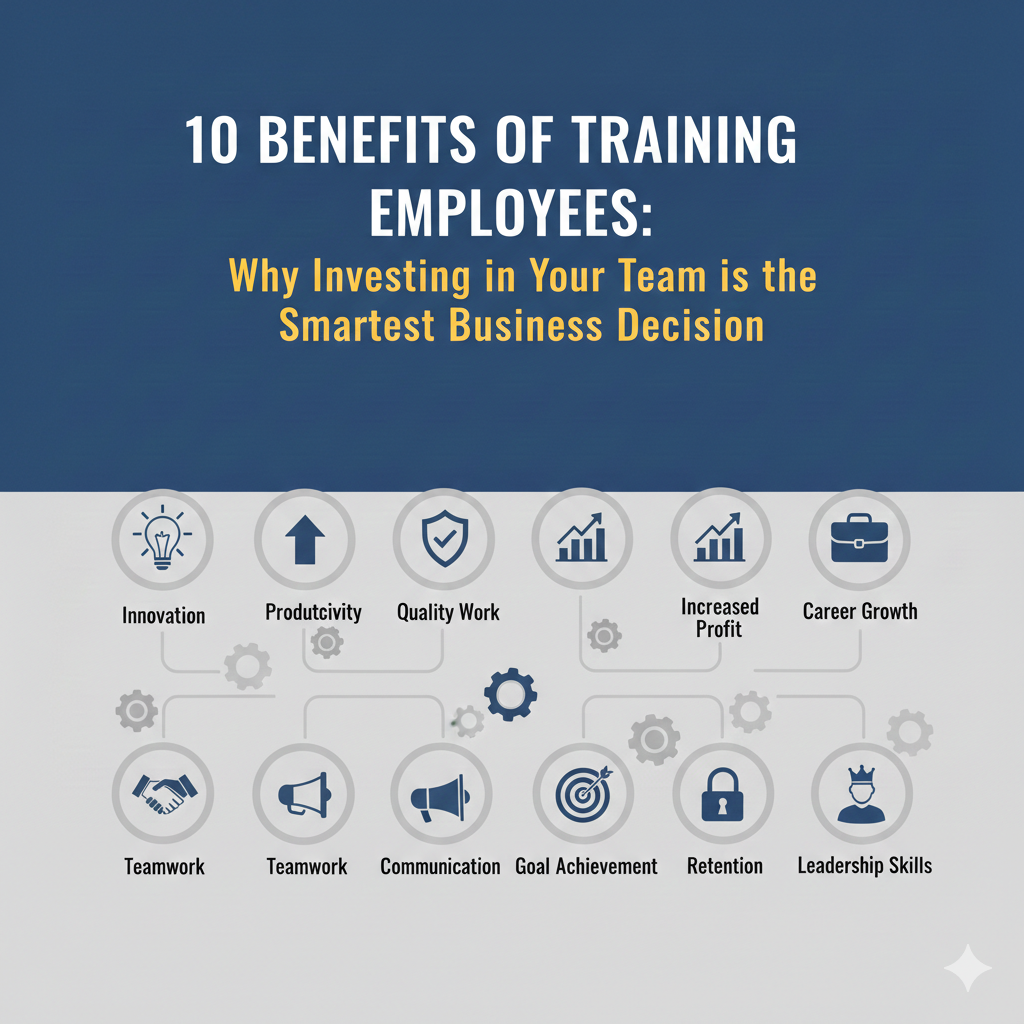
Every successful company has one thing in common: they invest in their people. But here’s what many business owners don’t realize—employee training isn’t just an expense. It’s one of the highest-return investments you can make.
Think about it. You could spend millions on the latest technology or fancy office space, but none of that matters if your team doesn’t have the skills to use them effectively. Training your employees is like sharpening the tools that actually do the work.
In this guide, we’ll explore the top 10 benefits of employee training and show you exactly why companies that prioritize learning consistently outperform those that don’t. Whether you’re considering your first learning management system or looking to upgrade your current employee training software, understanding these benefits will help you make smarter decisions for your business.
Why Employee Training Matters More Than Ever in 2026
Before we dive into the specific benefits, let’s look at the big picture. The workplace has changed dramatically in recent years. Workers are willing to learn new skills to stay employable, and many prefer learning at work. Technology evolves at lightning speed, customer expectations keep rising, and skilled workers have more job options than ever.
Companies that don’t invest in training fall behind quickly. On the flip side, organizations with strong training programs see measurable improvements across every area of their business—from profits to employee satisfaction.
Research shows that companies with comprehensive training programs have significantly higher income per employee and better profit margins. That’s not a coincidence. When you help your people get better at what they do, everything else improves.
The good news is that employee training has never been easier to deliver at scale. Modern corporate learning management systems make it simple to train hundreds or thousands of employees consistently, track their progress, and measure real business results.
Let’s look at exactly how training benefits your organization.
1. Boosted Employee Performance and Productivity
This is the most obvious benefit, but it’s worth starting here because the impact is huge.
When employees receive proper training, they simply perform better. They make fewer mistakes, work faster, and produce higher-quality results. It’s that straightforward.
Research tracking an upskilling program found that frontline output increased while help-seeking emails dropped, freeing managers to focus on strategic work. That’s the double benefit—employees become more capable, and managers have more time for important tasks.
Here’s what better performance looks like in practice:
Sales teams close more deals when they’re trained on consultative selling techniques. Customer service reps resolve issues faster when they understand products deeply. Developers write better code when they learn new frameworks and best practices. Managers make smarter decisions when they receive leadership training.
The key is using an LMS for employee training that delivers content in ways people actually learn. Boring slideshows don’t stick. Interactive modules, real-world scenarios, and hands-on practice do.
EuctoVerse, one of the leading corporate LMS platforms, understands this perfectly. Their platform focuses on creating engaging learning experiences through gamification, microlearning, and behavior-based training approaches. When training is engaging, people actually complete it and apply what they learn.
A quality learning management system for business also lets you deliver role-specific training at scale. Your marketing team gets marketing training. Your finance team gets finance training. Everyone learns exactly what they need to excel in their specific role.
2. Higher Employee Retention and Reduced Turnover
Losing good employees is expensive and disruptive. The cost of replacing a skilled worker can reach 150 percent of that employee’s annual compensation, with managerial roles costing even more at 200 to 250 percent.
Now here’s an interesting fact: one of the top reasons people leave jobs is lack of growth opportunities. Studies show that employees would stay at their company longer if there were opportunities for continued learning and development. Some research even indicates employees would quit their jobs if the company offered no learning opportunities.
When you invest in employee training programs, you’re telling your team: “We believe in you. We want you to grow. We’re committed to your future.”
That message matters. A lot.
Using employee training software to create clear learning paths shows employees exactly how they can advance in their careers. They can see what skills they need to develop for the next level. They feel valued and invested in.
Modern corporate training platforms like EuctoVerse make this easy by offering role-based learning journeys. Employees can track their progress, earn certifications, and see their development over time. This transparency creates motivation and loyalty.
The math is simple: investing a few thousand dollars in training is far cheaper than losing an employee and spending tens of thousands to recruit, hire, and train their replacement.
3. Improved Employee Engagement and Morale
Engaged employees care about their work. They show up motivated, contribute ideas, and go the extra mile. Disengaged employees do the minimum and count down the hours until they can leave.
Research indicates that well-planned employee training programs have a positive impact on engagement levels. When people feel they’re learning and growing, they’re naturally more invested in their work.
Think about your own experience. Don’t you feel more energized when you’re learning something new and interesting? When you’re stagnating and doing the same thing over and over, doesn’t work feel more like drudgery?
Your employees feel the same way.
Training breaks up monotony, provides fresh challenges, and gives people a sense of progress. It shows them their company cares enough to invest in their development.
The best learning management systems include features that make training enjoyable rather than a chore. Gamification elements like points, badges, and leaderboards tap into our natural competitiveness and desire for achievement. Social learning features let employees share knowledge and celebrate wins together.
EuctoVerse takes engagement seriously with its “living learning ecosystem” approach. The platform doesn’t just dump content on employees and hope they complete it. Instead, it uses nudges, rewards, community features, and personalized learning paths to keep people genuinely engaged with their development.
4. Stronger Company Culture and Values Alignment
Your company culture isn’t just about having a ping pong table or casual Fridays. Real culture is about shared values, behaviors, and ways of working that define how things get done in your organization.
Training is one of the most effective ways to build and reinforce that culture.
When you train employees on your company’s mission, values, and expected behaviors, you’re not just sharing information. You’re shaping how people think and act at work. You’re creating alignment across your entire organization.
This is especially important for larger companies or those with multiple locations. How do you ensure someone working in your California office has the same understanding of company values as someone in your Texas office? Through consistent, well-designed training delivered via a corporate LMS software platform.
Onboarding training sets the tone from day one, introducing new hires to “how we do things here.” Ongoing training reinforces those cultural messages and keeps everyone aligned as the company evolves.
EuctoVerse specializes in culture-driven learning. Their platform is specifically designed to support organizations that want to use education as a culture-building tool. Features like customizable content, branded learning environments, and culture dashboards help companies create learning experiences that reflect and reinforce their unique culture.
5. Enhanced Employee Skills and Competencies
This might seem obvious, but it’s worth calling out specifically: training directly improves the skills your team has.
The business landscape changes constantly. New technologies emerge. Industry regulations evolve. Customer expectations shift. Best practices get updated. If your team’s skills stay frozen in time while the world moves forward, you’ll fall behind.
Organizations are increasingly providing employees with technical upskilling, particularly in areas like AI. The skills that made someone great at their job five years ago might not be enough today.
Regular training keeps your workforce current and capable. Technical skills training ensures people can use the latest tools and technologies. Soft skills training helps them communicate better, solve problems more effectively, and work well in teams.
Here’s the really interesting part: when you help employees develop skills, they often discover capabilities they didn’t know they had. Someone might take a data analysis course and realize they love working with numbers. Another person might complete leadership training and find they’re great at mentoring others.
An enterprise learning management system makes it easy to offer diverse learning opportunities. Employees can explore different areas, build cross-functional skills, and discover new strengths.
The best employee training platforms include skills tracking features that let you see what capabilities exist across your organization. This helps with succession planning, project staffing, and identifying skill gaps that need to be filled.
6. Better Compliance and Risk Management
Let’s talk about something less exciting but extremely important: compliance training.
Depending on your industry, you likely have mandatory training requirements around workplace safety, data privacy, harassment prevention, financial regulations, or other areas. Getting compliance wrong can result in serious consequences—fines, lawsuits, damaged reputation, or even business closure.
The average annual cost from companies that experience non-compliance issues is substantial, yet many organizations lack formal compliance training plans. That’s a risky gamble.
Proper compliance training protects your company and your employees. It ensures everyone understands the rules, knows how to follow them, and recognizes potential violations.
A learning management system for business makes compliance training manageable. Instead of scrambling to get everyone through annual training sessions or tracking completion with spreadsheets, the system handles it automatically.
Key compliance features to look for in employee training software:
- Automated enrollment when employees join or change roles
- Built-in assessments to verify understanding
- Automatic certification upon successful completion
- Tracking and reporting for audit purposes
- Automated reminders when certifications are about to expire
EuctoVerse includes comprehensive compliance tracking capabilities. The platform can automatically assign required courses, track completion, generate certificates, and provide real-time reports showing exactly who’s current on their training and who needs follow-up.
Breaking compliance training into bite-sized microlearning modules also helps with retention. Instead of a mind-numbing three-hour session that nobody remembers, employees take focused 10-15 minute modules over several weeks. They actually learn the material instead of just clicking through to get it over with.
7. Increased Innovation and Problem-Solving Ability
When employees expand their knowledge and skills, something interesting happens: they start thinking differently. They connect ideas in new ways. They approach problems from fresh angles. They suggest innovations that might never have occurred to them before.
Training exposes people to new concepts, methodologies, and perspectives. This mental expansion naturally leads to more creative thinking and better problem-solving.
For example, an employee who completes design thinking training might apply those principles to streamline a clunky internal process. Someone who learns about data analytics might spot patterns that reveal a new market opportunity. A manager trained in agile methodologies might restructure their team’s workflow to improve efficiency.
Cross-training is particularly valuable for innovation. When people understand how different parts of the business work, they can identify improvements that span multiple areas. They see the bigger picture and suggest solutions that others might miss.
Corporate learning management systems that support diverse content types and learning methods encourage this kind of innovative thinking. Video courses, interactive simulations, case studies, and discussion forums all stimulate different types of learning and creativity.
EuctoVerse supports various content formats—from video and voice-over presentations to whiteboard animations and screen recordings. This variety keeps learning fresh and engages different learning styles, which promotes creative thinking.
The platform also includes community features that let employees share ideas and learn from each other. This social learning aspect often sparks innovation as people build on each other’s knowledge and experiences.
8. Stronger Competitive Advantage in the Market
Here’s a truth that many business owners overlook: in most industries, your products and services are probably pretty similar to your competitors’. The real difference? Your people and what they’re capable of.
Companies with well-trained, highly skilled teams simply outperform those with undertrained staff. They deliver better customer experiences. They execute more effectively. They adapt faster to market changes. They innovate more successfully.
Organizations that prioritize training see improvements in productivity, retention rates, and overall organizational growth. Those advantages compound over time, creating a widening gap between leaders and laggards.
Think about it from your customer’s perspective. If they’re choosing between your company and a competitor, and your team is more knowledgeable, more helpful, and more capable, who do you think they’ll choose?
Investing in employee training software isn’t just about making your current team better. It’s about building organizational capabilities that competitors can’t easily copy. Your products can be reverse-engineered. Your marketing can be imitated. Your skilled, well-trained team? That takes years to develop.
Using a comprehensive LMS for corporate training helps you build this advantage systematically. You’re not relying on occasional workshops or hoping managers remember to train their people. You’re creating a consistent, scalable learning culture that continuously improves your workforce.
9. Improved Customer Satisfaction and Service Quality
Your employees are the face of your company to your customers. How they interact with customers directly impacts satisfaction, loyalty, and revenue.
Well-trained employees provide better customer service. They know your products inside and out. They can answer questions confidently. They solve problems efficiently. They handle difficult situations professionally. They create positive experiences that keep customers coming back.
The impact on customer satisfaction can be significant. When your support team receives comprehensive product training, they resolve issues faster with fewer escalations. When your sales team learns consultative selling techniques, they better understand customer needs and provide more value. When your delivery team understands quality standards, customers receive consistently excellent service.
A learning management system for business lets you deliver customer-focused training to everyone who interacts with customers, whether directly or indirectly. Frontline staff get customer service training. Product teams learn about customer pain points. Everyone understands how their role impacts the customer experience.
EuctoVerse’s approach to training emphasizes behavior transformation, not just information transfer. This is crucial for customer-facing skills. It’s not enough to know what good customer service looks like—employees need to actually practice those behaviors until they become natural.
The platform’s assessment features let you verify that employees truly understand customer service principles before they interact with real customers. Certifications provide accountability and help managers identify who might need additional coaching.
10. Measurable Return on Investment (ROI)
Let’s talk numbers. At the end of the day, business is about results, and employee training delivers impressive financial returns.
Studies suggest that for every dollar spent on training, companies can expect a return between four and six dollars. That’s a 400-600% ROI, which is exceptional by any standard.
Where does this return come from?
Cost savings: Less employee turnover means lower recruiting and hiring costs. Fewer errors mean less wasted time and materials. Better compliance means avoiding fines and legal fees.
Revenue increases: Better-trained sales teams sell more. Skilled employees work faster and serve more customers. Innovation leads to new products and services.
Efficiency gains: Employees who know what they’re doing work more efficiently. Less time is spent fixing mistakes or figuring things out. Processes run smoother.
The key to realizing strong ROI is using quality employee training platforms that actually work. Cheap, clunky systems with boring content produce poor results. Employees don’t complete the training, don’t retain what they learn, and don’t change their behavior.
Sophisticated corporate LMS software like EuctoVerse is designed specifically to maximize training ROI. The platform includes:
- Real-time analytics dashboards that show completion rates, assessment scores, and engagement metrics
- Learning insights that help you understand what’s working and what needs improvement
- Integration with HR systems to connect training data with business outcomes
- Mobile access so employees can learn anytime, anywhere, maximizing completion rates
- Gamification and engagement features that ensure people actually complete courses
When you can prove that your training programs improve performance, reduce turnover, and drive business results, investing in learning becomes an easy decision.
How to Maximize These Benefits with the Right Training Approach
Understanding the benefits of training is one thing. Actually capturing those benefits requires the right approach and tools.
Here’s what successful companies do differently:
They invest in modern employee training software. Paper-based training, in-person-only sessions, and email-based programs don’t scale. They’re inefficient, hard to track, and produce inconsistent results. A proper learning management system is essential for delivering and managing training effectively.
They make training continuous, not occasional. Annual training events don’t work. Skills decay quickly without reinforcement. The best companies create ongoing learning cultures where development happens constantly in small, digestible pieces.
They personalize the learning experience. Generic, one-size-fits-all training wastes people’s time. Role-based learning paths ensure everyone gets training that’s actually relevant to their job and career goals.
They measure and optimize. You can’t improve what you don’t measure. Track completion rates, assessment scores, engagement metrics, and business outcomes. Use that data to continuously refine your programs.
They choose the right technology partner. Not all learning management systems are created equal. You need a platform that’s built for enterprise scale, offers modern features, and actually helps you achieve business results.
This is where EuctoVerse stands out among corporate training platforms. The system was designed from the ground up for modern organizations that see training as a strategic business investment, not just a checkbox to tick.
Key capabilities that make EuctoVerse effective:
Scalability: Whether you have 100 employees or 10,000, the platform handles your needs. Unlimited courses and users in higher tiers mean you never outgrow the system.
Engagement: Gamification features, mobile apps, and interactive content keep employees actually engaged with training instead of just clicking through mindlessly.
Analytics: Real-time dashboards show exactly what’s happening with your training programs. You can see engagement trends, identify struggling learners, and prove ROI to leadership.
Integration: The platform connects with your existing HRMS, SSO, and other business systems. No duplicate data entry or disconnected tools.
Customization: White-label mobile apps and customizable branding mean the learning experience feels like a natural extension of your company, not a generic third-party tool.
Support: Dedicated customer success leads and SLA-driven technical support ensure you get help when you need it.
Getting Started: Building Your Employee Training Strategy
If you’re convinced that employee training is worth the investment (and you should be), here’s how to move forward:
Assess your current state. What training do you already offer? What gaps exist? What are your biggest skill deficiencies or compliance risks?
Define clear objectives. What specific business outcomes do you want training to achieve? Reduced turnover? Improved sales? Better compliance? Higher customer satisfaction?
Choose the right learning management system. Research corporate LMS options and select one that matches your needs, budget, and growth plans. Look for proven platforms with strong reviews and comprehensive features.
Start with high-impact training. Don’t try to build everything at once. Begin with training that addresses your most pressing needs or biggest opportunities.
Build learning into your culture. Training shouldn’t be a special event. Make it a normal part of how work happens. Encourage managers to support employee development. Recognize and reward learning achievements.
Measure and iterate. Track your metrics from day one. See what’s working and what’s not. Continuously improve your programs based on data and feedback.
The companies winning in their markets right now aren’t necessarily the ones with the best products or the biggest marketing budgets. They’re the ones with the most capable, well-trained teams executing brilliantly day after day.
You can build that kind of team. It starts with making a real commitment to employee development and choosing the right tools to support that commitment.
The Bottom Line: Training is an Investment, Not an Expense
Every benefit we’ve discussed—improved performance, higher retention, better engagement, stronger culture, enhanced skills, reduced risk, increased innovation, competitive advantage, customer satisfaction, and measurable ROI—these all flow from one fundamental decision: investing in your people.
When you help your employees get better at their jobs, when you show them you’re committed to their growth, when you give them the tools and knowledge they need to succeed, amazing things happen.
They work harder. They stay longer. They care more. They perform better. Your customers notice. Your bottom line reflects it. Your company culture strengthens.
The question isn’t whether you can afford to invest in employee training. The real question is whether you can afford not to.
Your competitors are training their teams. The best talent wants to work for companies that invest in development. The market rewards organizations with highly skilled workforces.
Modern learning management systems like EuctoVerse make it easier than ever to deliver effective training at scale. The technology is mature, the ROI is proven, and the competitive advantages are clear.
The only thing standing between you and a more capable, engaged, productive workforce is the decision to prioritize training and choose the right platform to deliver it.
Make that decision today. Your future self—and your future business results—will thank you.
Frequently Asked Questions About Employee Training Benefits
Q: What is the ROI of employee training programs?
Studies show that companies typically see a return of $4-6 for every $1 spent on employee training. This ROI comes from multiple sources including increased productivity, reduced turnover costs, fewer errors and waste, improved sales performance, and better compliance. The key to maximizing ROI is using quality employee training software that delivers engaging content, tracks results, and proves impact. Modern learning management systems like EuctoVerse provide real-time analytics that directly connect training investments to business outcomes.
Q: How does employee training improve retention rates?
Employee retention improves dramatically when companies invest in training because it shows workers their employer is committed to their growth and future. Research indicates that the vast majority of employees would stay at their company longer if offered learning and development opportunities, with some studies showing employees would quit jobs that offer no growth opportunities. Using a corporate LMS to create clear career development paths makes employees feel valued and gives them concrete reasons to stay. The cost of training is far less than the cost of turnover, which can reach 150-250% of an employee’s annual compensation.
Q: What are the most important types of employee training for businesses?
The most impactful training areas include: technical skills and digital literacy (including AI and industry-specific tools), soft skills like communication and leadership, compliance and safety training (required by law in many industries), and role-specific development tailored to each position. The best approach is using an enterprise learning management system that can deliver personalized learning paths for different roles while ensuring everyone gets essential compliance and cultural training. EuctoVerse excels at this with role-based learning journeys that scale across entire organizations.
Q: How can small businesses afford comprehensive employee training programs?
Modern employee training platforms have made professional development accessible for businesses of all sizes. Cloud-based learning management systems eliminate expensive infrastructure costs, and you only pay for what you need as you grow. The real question isn’t whether small businesses can afford training—it’s whether they can afford not to train. One quality employee leaving costs more than months of LMS subscriptions. Start with critical training needs, use a scalable platform, and expand as you see results. Many corporate LMS options offer tiered pricing that makes sense for smaller teams.
Q: What features should I look for in employee training software?
Essential features in a quality learning management system for business include: mobile accessibility for learning anywhere/anytime, robust analytics and reporting to track completion and measure impact, integration capabilities with your HRMS and other systems, assessment and certification tools for compliance, gamification features to boost engagement, role-based learning paths for personalization, unlimited or scalable course and user capacity, and strong customer support. EuctoVerse offers all these features plus culture-building tools, behavior transformation capabilities, and a living learning ecosystem approach that goes beyond simple content delivery.